


THE CULTURE OF CONNECTION and the Art of Building Cultural Diplomatic Bridges


De Barbieri’s career illustrates a form of international engagement in which diplomacy is not confined to official diplomatic institutions, but can also emerge through heritage, culture, business, hospitality, sport and the preservation of historical memory.
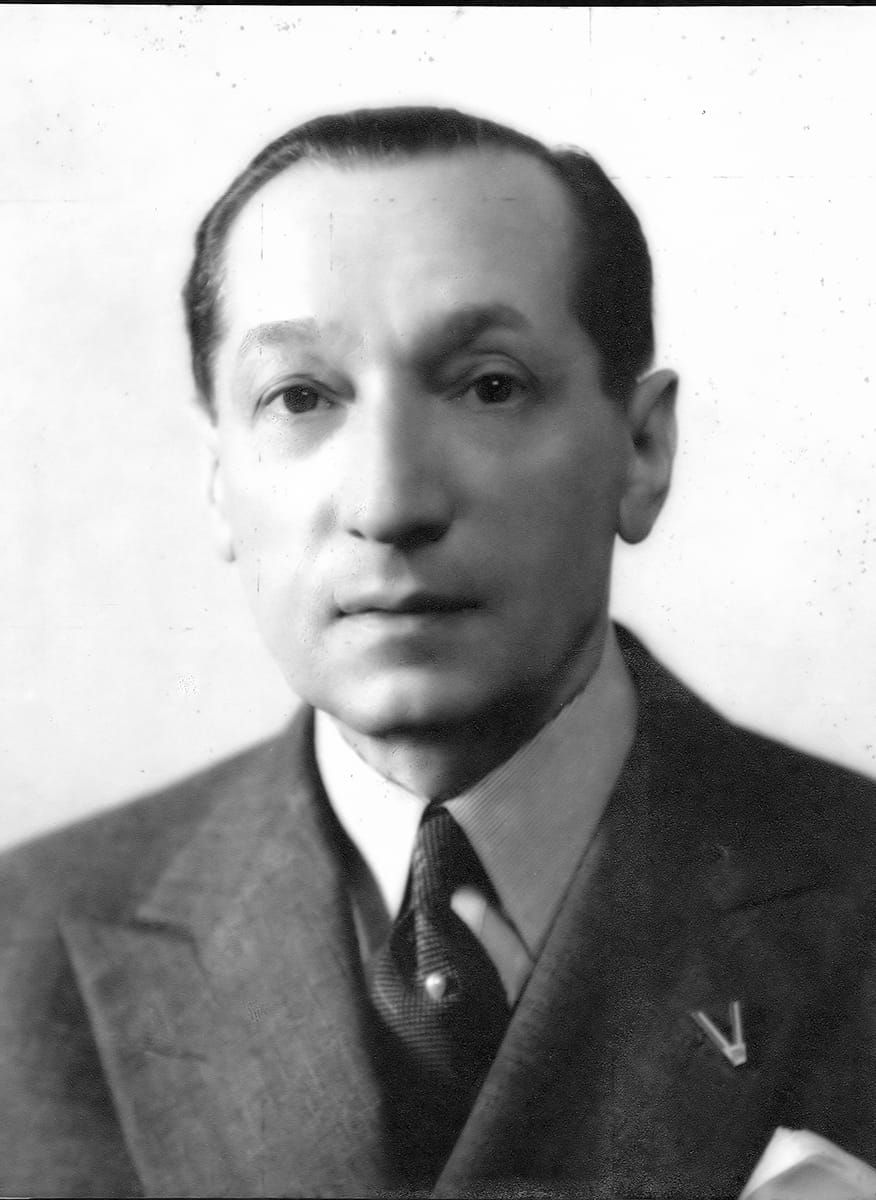
Enrico De Barbieri
Diplomacy Beyond the Diplomatic Table
The Genoese ambassador’s career has brought together international relations, cultural heritage, business, music and hospitality
By Professor KRMB Knight Chevalier Sir MBE Adrian Daisley, LLB, LL.M.
There are people whose professional lives cannot easily be confined to one field. Ambassador Dr. Enrico De Barbieri is one of them.
Born in Genoa on October 5th 1966, De Barbieri has spent decades working across diplomacy, business, culture, music, heritage, hospitality, sport and public relations. His career has included sixteen years as Honorary Consul of the Republic of South Africa in Genoa, work promoting Genoese identity internationally, involvement with the historic relationship between Italy and India, and responsibilities connected to the musical heritage of Paganini.
His current work at Miramare The Palace in Sanremo brings several of these interests together in one institution.
The common thread is international engagement: establishing relationships, maintaining them and finding ways for cultural and commercial interests to meet.
Genoa and the International Role of a City
Genoa provides the foundation for much of De Barbieri’s international work.
A historic maritime Centre, the city has long been associated with trade, travel and contact between different cultures. In 2018, during the Columbian celebrations, De Barbieri was appointed Ambassador of Genoa in the World.
The role reflects a form of international representation that differs from conventional state diplomacy. Instead of representing a country, the focus is on promoting a city, its history, cultural identity and international relationships.
For cities with long histories, that work presents a particular challenge. Heritage has value, but it must also be communicated in a way that remains relevant to contemporary audiences.
De Barbieri’s work in promoting Genoese cultural and artistic excellence has been part of that effort.
Family Legacy of Art, Craftsmanship and Culture
Dr. De Barbieri's international identity is also deeply connected to a distinguished Genoese family heritage.
His grandfather, Paolo De Barbieri, was a renowned violin maker, continuing the city's long tradition of craftsmanship, music and artistic excellence.
His father, Renato De Barbieri, was regarded as the “Paganini of the 20th century,” a distinction reflecting his celebrated connection with the violin and the musical heritage associated with Genoa's most famous violinist, Niccolò Paganini.
Both Paolo and Renato De Barbieri are buried in the Pantheon at the Monumental Cemetery of Staglieno in Genoa, one of the city's important historical and cultural landmarks.
This family legacy provides an important cultural dimension to Ambassador Dr. De Barbieri's international work. His connection to Genoa is therefore not simply diplomatic; it is rooted in generations of artistic, cultural and civic heritage.

Sixteen Years Representing South Africa in Genoa
From 2003 to 2019, De Barbieri served as Honorary Consul of the Republic of South Africa in Genoa.
Sixteen years gave him considerable exposure to the institutional, commercial and cultural dimensions of the Italy–South Africa relationship.
His involvement did not end with his consular appointment. He subsequently continued his work through the Italy–South Africa Association, where he has served as President since 2010 after previously serving as Vice President and founding member.
In 2021, he became President and co-founder of the South Africa–Monaco Association.
The sequence is significant because it demonstrates a sustained interest in maintaining international relationships beyond the duration of a particular appointment.
An Italian Connection to India
Another part of De Barbieri’s work is rooted in family history.
His great-uncle, Angelo Firpo, was associated with the Italian presence in Calcutta through food and hospitality. The family story is closely connected to the development of an Italian commercial and cultural presence in India.
De Barbieri has continued to preserve that connection through his role as Sole Director of Firpo’s 1917, the historic family business associated with his great-uncle.
His recognition as an Honorary Member of the Netaji Research Bureau in Kolkata in 2024 and recognition by INTACH for the Firpo family’s contribution to the social and cultural development of Kolkata have added to that work.
For De Barbieri, the family history is not simply a matter of ancestry. It provides a basis for maintaining a relationship between two countries with very different histories and cultural traditions.
Paganini and the Preservation of Musical Heritage
Music represents another important area of his work.
De Barbieri is the son of the distinguished violinist Renato De Barbieri. His involvement with the musical heritage of his father has also brought him into the wider world surrounding Niccolò Paganini and the Paganini Prize.
He has served as a Paganini Ambassador and on the Paganini Prize Committee, helping promote the competition in Italy and internationally.
He also curates his father's archive.
The work of maintaining an archive is less visible than organising an international event or holding a public appointment, but it serves a different purpose. It preserves records, documents and memories that can provide future generations with a clearer understanding of a cultural and artistic tradition.
Miramare The Palace: Heritage Meets Hospitality
De Barbieri’s present work at Miramare The Palace in Sanremo provides another dimension to his international activities.
As Chairman of the Board of Directors of the historic five-star hotel, he is involved with an institution whose history extends back to 1870.
Miramare has hosted internationally recognised figures over the years, including Evita Perón, Queen Elena and Charles de Gaulle.
Maintaining the relevance of a historic hotel, however, requires more than preserving its past. It also requires a contemporary vision for the institution.
De Barbieri has identified three areas within that vision: internationalization, innovation and memory.
The intention is to strengthen the hotel’s position within international circuits while making its history, cultural programme, events and hospitality part of its identity.
That places the hotel in an interesting position. A property such as Miramare is not only a place where visitors stay. It can also provide a setting in which business, tourism, culture and international relationships intersect.
Hospitality has always created opportunities for people to meet. In an international setting, those meetings can sometimes develop into relationships that extend well beyond the original purpose of a visit.
Monaco, Kenya and an Expanding International Network
De Barbieri’s activities also extend beyond Italy.
His role as a WUSME Ambassador in the Principality of Monaco connects him with international business and small and medium-sized enterprises.
His appointment as Goodwill Ambassador of the Kenya National Paralympic Committee has brought another dimension to his work through sport and inclusion.
His involvement with India connects him with Asia and the history of the Italian community in Kolkata. His South African activities provide a long-standing connection with Africa, while Genoa remains the central geographical point of reference.
The result is a professional network that crosses several sectors and regions.
Rethinking Cultural Diplomacy
Cultural diplomacy is often associated with governments and national cultural institutions. De Barbieri’s career illustrates another side of the concept.
Cultural relationships can develop through business, music, heritage, tourism, sport and personal relationships as well as through formal diplomatic channels.
That does not make these activities a substitute for government-to-government diplomacy. They operate alongside it.
A cultural event can bring people together when formal discussions are difficult. A business relationship can lead to cultural exchanges. A historic institution can become a meeting place for people from different countries.
These interactions may appear informal, but they can contribute to a wider understanding between communities and institutions.
What Smaller States Can Learn From Cultural Influence
For smaller countries, this issue has particular relevance.
From Barbados, the question of how a small state can develop and maintain an international presence is one I find especially important.
International influence is not determined solely by population, territory or economic size. Culture offers countries another means of establishing relationships abroad.
Music, food, sport, education, language, history and creative industries can all contribute to a country's international profile.
The same principle applies to cities and regions.
Genoa provides one example of how a historic city can use its cultural identity as part of its international engagement.
For countries such as Barbados, the wider lesson is that cultural identity can be part of international outreach without requiring the resources of a major power.
Business, Public Relations and International Advocacy
De Barbieri’s experience in business, tourism, events, consultancy and public relations also informs his approach to international engagement.
The boundaries between commercial activity and cultural diplomacy are not always clear.
A historic business can carry the identity of a city or country into another market. A hotel can become a venue for international meetings. A cultural event can generate both commercial activity and international exposure.
For those working across these areas, the ability to communicate the significance of an institution or cultural tradition becomes an important part of the work.
The objective is not simply to promote an organisation. It is to explain its history, establish its relevance and create opportunities for others to engage with it.
Leadership, Responsibility and Honour
De Barbieri has described his leadership approach as “proactive, inclusive, but with a clear vision.” He has also placed importance on institutions, relationships and the concept of honour.
That emphasis is notable at a time when professional visibility is often measured through titles, online presence and public recognition.
Leadership can also be considered in terms of responsibility: how positions are used, how relationships are maintained, what institutions are strengthened and what cultural heritage is preserved.
These questions apply well beyond diplomacy.
They are relevant to business leaders, educators, cultural representatives and anyone working across international networks.
A Career Defined by Its Connections
The various chapters of De Barbieri’s career are distinct, but they are also connected.
Genoa represents his relationship with the identity and international profile of a city.
South Africa represents sixteen years of consular engagement and continuing institutional involvement.
India represents family history and a long-standing cultural connection.
Paganini represents music and the preservation of artistic heritage.
Miramare represents the meeting point between history, hospitality and international business.
Taken individually, each area tells part of the story. Considered together, they show a career built across institutions and borders rather than within a single professional category.
The modern world has made communication easier than ever. Communication, however, does not automatically produce understanding.
That is where cultural and international engagement continues to have a role.
People still need opportunities to meet. Institutions still need relationships. Cultural traditions still need to be preserved and introduced to new audiences.
For Ambassador Dr. Enrico De Barbieri, those responsibilities have taken many forms over the course of his career.
From Genoa to South Africa, from India to Monaco, from Paganini to Miramare, the geography and subject matter have changed.
The underlying work remains familiar:
building relationships across borders and creating opportunities for cultures, institutions and people to encounter one another.


Comments